

Introduction
One of the biggest selling points of modern AI voice tools is how natural they sound across different languages and styles. With the launch of VoiceBeast AI, many potential buyers want to know: What languages and voices are available, and how much control do you really have over pitch, speed, and emotional tones?
In this article, we’ll take a closer look at the customization features inside VoiceBeast AI and what they mean for different types of creators. For the full breakdown of pricing, funnel, and OTOs, you can read the complete VoiceBeast AI Review 2025 here.
Language and Voice Options
VoiceBeast AI supports 100+ languages and accents, making it one of the more global-friendly text-to-speech tools in the market. Whether you need English, Spanish, French, Hindi, or Arabic, the app gives you plenty of options to reach local or international audiences.
Within each language, there are 120+ lifelike voices (both male and female). Unlike older software that sounds robotic, these voices are tuned to sound closer to professional narration. This variety makes it easy to match the right voice to your content.
Emotional Tones and Delivery Styles
A standout feature of VoiceBeast AI is its emotion-based engine. Instead of flat delivery, you can choose tones like:
- Joyful
- Serious
- Neutral
- Excited
- Calm
Adding emotion to voiceovers is important for engagement. For example, an ad may benefit from excitement, while an eLearning video might need a calmer tone.
Customization: Pitch, Speed, and Pacing
VoiceBeast AI gives you control over:
- Pitch: Raise or lower the pitch for different age or energy effects.
- Speed: Adjust how quickly the script is delivered, useful for ads versus long-form narration.
- Pacing: Fine-tune pauses between sentences for natural flow.
These options make a big difference in tailoring the audio to fit the type of project you’re working on.
Example Use Cases
- YouTube Creators: Add energetic voices for intros and calm narration for tutorials.
- Advertisers: Create multiple variations of the same ad with different tones to test engagement.
- Educators: Produce lessons in multiple languages with a consistent teaching style.
- Authors: Generate audiobooks in different emotional deliveries for different scenes.
Comparison with Other Tools
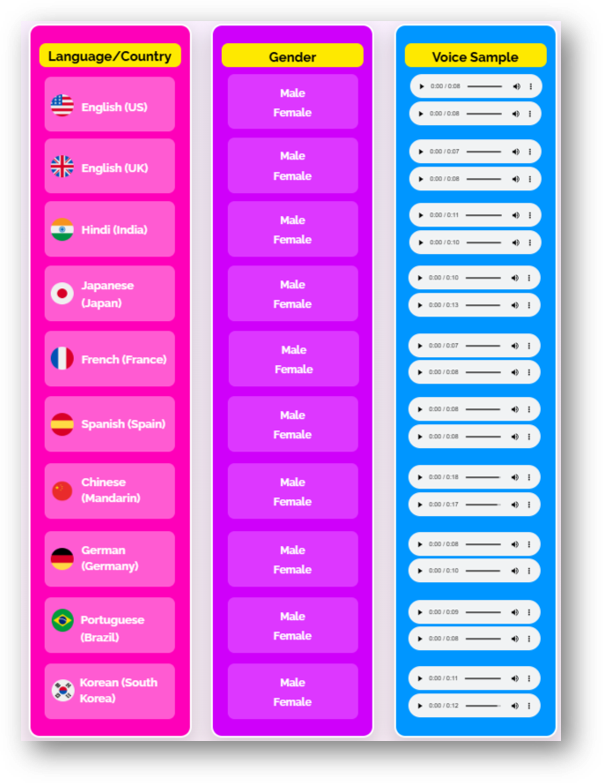
While many AI voice tools offer language support, few deliver real emotion-rich voices across such a large library. This makes VoiceBeast AI more versatile than most subscription-based TTS apps.
Pros of Customization
- Wide range of languages and voices
- Authentic emotional tones available
- Adjustable pitch, speed, and pacing
- Works across multiple content types
Cons of Customization
- Some advanced emotional tones require OTO upgrades
- Internet connection required for generating previews
- Voice cloning (for personal voice replication) is locked behind OTO3
Final Thoughts
If you’re looking for flexibility in how your content sounds, VoiceBeast AI delivers a wide variety of voices, languages, and tones with detailed customization options. Whether you’re producing ads, audiobooks, or eLearning content, the ability to adjust pitch, speed, and emotion makes it a practical tool for creators who need quality without hiring professional voice actors.
For a deeper dive into its funnel, OTOs, and real demo examples, check the full VoiceBeast AI Review 2025 here.