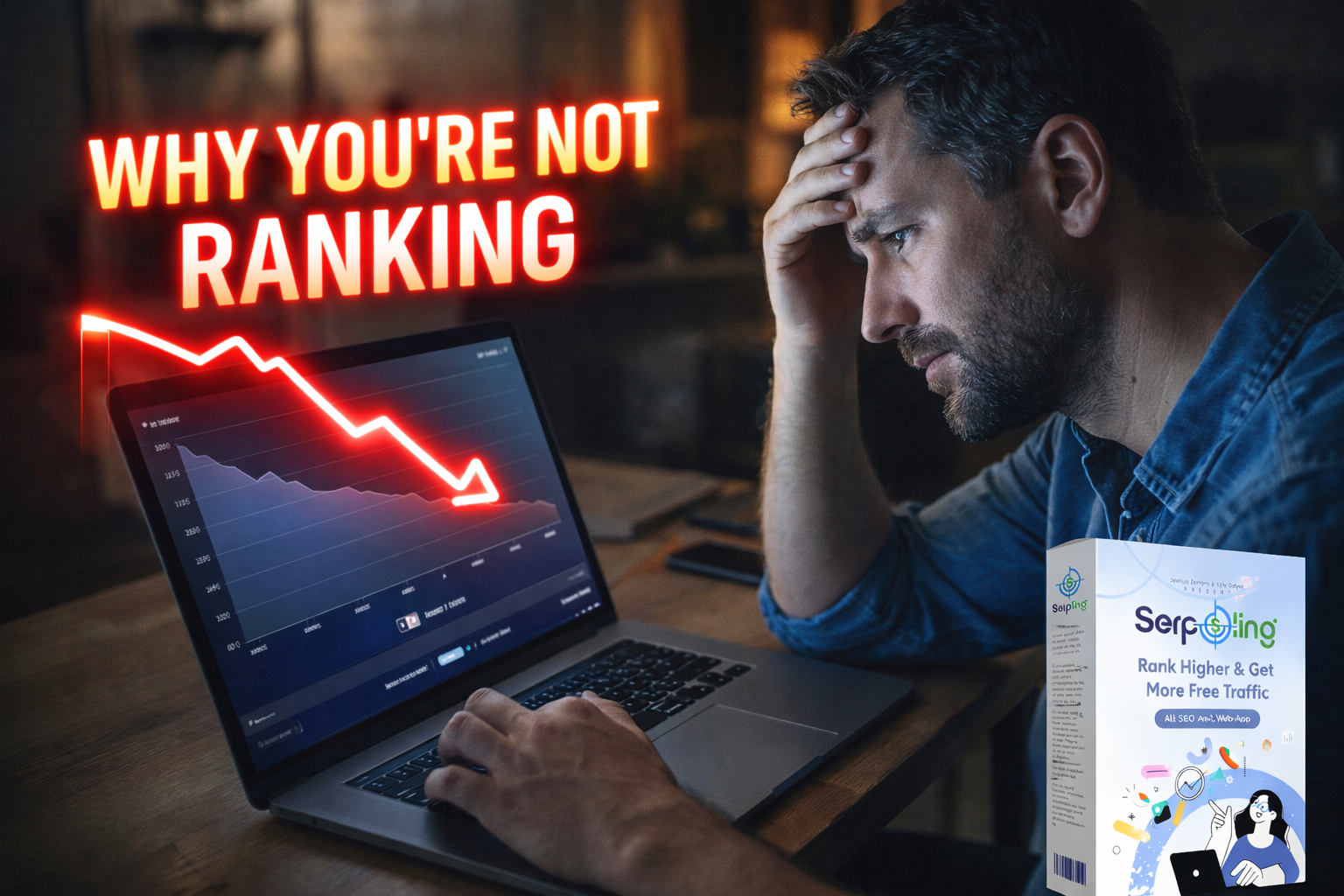
Why are “easy keywords” not ranking in SEO anymore?
You’ve done everything right. You found keywords labeled “low competition,” created content around them, and hit publish.
Yet nothing happens.
If you’re wondering why not ranking SEO SerpSling is even a question people are asking, you’re not alone. This is one of the most common frustrations in SEO right now.
The truth is simple. Most “easy” keywords are not actually easy.
They look easy on the surface. However, they hide deeper competition factors that most tools don’t show.
Why am I not ranking SEO SerpSling even after targeting low competition keywords?
In simple terms, you’re not ranking because keyword difficulty scores alone are misleading. You also need to understand competitor strength, backlinks, and content intent.
This is where SerpSling helps.
Instead of just giving a number, it shows:
- What competitors are doing
- How strong their pages are
- What you need to outrank them
Therefore, you stop guessing and start making informed decisions.
What are the real reasons your SEO is not working?
Here’s what actually matters. Ranking failure usually comes down to a few hidden issues.
Are you underestimating competition strength?
A keyword might show low difficulty. However, if the top results are:
- Established domains
- Authority sites
- Well-optimized content
Then ranking becomes much harder.
SerpSling solves this by showing you who you’re competing against, not just a score.
Are you missing backlink requirements?
Many beginners ignore backlinks.
However, even low competition keywords often require:
- A minimum number of backlinks
- Relevant referring domains
SerpSling analyzes this for you. So instead of guessing, you know exactly what’s needed.
Are you targeting the wrong search intent?
This is one of the biggest mistakes.
For example:
- You write an article
- Google prefers product pages
As a result, your content never ranks.
SerpSling helps you identify what type of content is ranking, so you can match intent correctly.
How does SerpSling fix ranking problems step by step?
Let’s break this down with a practical example.
Step 1: Analyze the keyword properly
You enter your keyword.
Instead of just showing difficulty, SerpSling reveals:
- Competitor domains
- Backlink profiles
- Ranking patterns
Step 2: Reverse engineer competitors
This is where things change.
You can see:
- Exact backlinks used
- Anchor text strategy
- Content structure
Therefore, you’re no longer guessing what works.
Step 3: Adjust your strategy
Now you can:
- Choose better keywords
- Improve content structure
- Build the right backlinks
This is why why not ranking SEO SerpSling becomes less of a problem and more of a solved process.
Is SerpSling better than traditional SEO tools for this problem?
Traditional tools are powerful. However, they often leave interpretation up to you.
That’s where most people struggle.
SerpSling simplifies the process by:
- Giving actionable insights
- Reducing analysis time
- Showing exact ranking requirements
So instead of asking “why am I not ranking,” you start focusing on “what should I do next.”
If you want a broader perspective on how this fits into a complete SEO workflow, there’s a detailed breakdown available that connects all these steps together.
Can beginners fix ranking issues using SerpSling?
Yes, and that’s the key advantage.
Most beginners fail because they:
- Trust incorrect keyword data
- Don’t analyze competitors
- Lack a clear roadmap
SerpSling addresses all three.
Because of that, even if you’re new, you can:
- Avoid bad keyword choices
- Understand competition clearly
- Take the right actions from the start
What should you focus on instead of “easy keywords”?
The key idea is this.
Stop chasing “easy.” Start chasing “winnable.”
That means:
- Keywords with weak competitors
- Clear content gaps
- Achievable backlink requirements
SerpSling helps you identify exactly those opportunities.
Final thoughts
If your content isn’t ranking, the issue isn’t effort. It’s direction.
Why not ranking SEO SerpSling is a question that usually comes down to poor keyword validation and lack of competitive insight.
Once you fix that, everything changes.
If you want to understand how to properly validate keywords before creating content, you can explore a deeper walkthrough that explains the full process in a practical way.
Or, if you’d rather see how the platform handles this in real time, you can take a closer look at the tool here and explore its keyword analysis features yourself.