
WP Sync Task Limits and Credit Charges: Does It Really Have Unlimited Automation?
Before buying any automation tool, it’s worth checking whether “unlimited” actually means unlimited. That’s usually what’s behind a search for WP Sync credit charges, especially if you’ve been burned before by a tool that quietly throttles you once you scale.
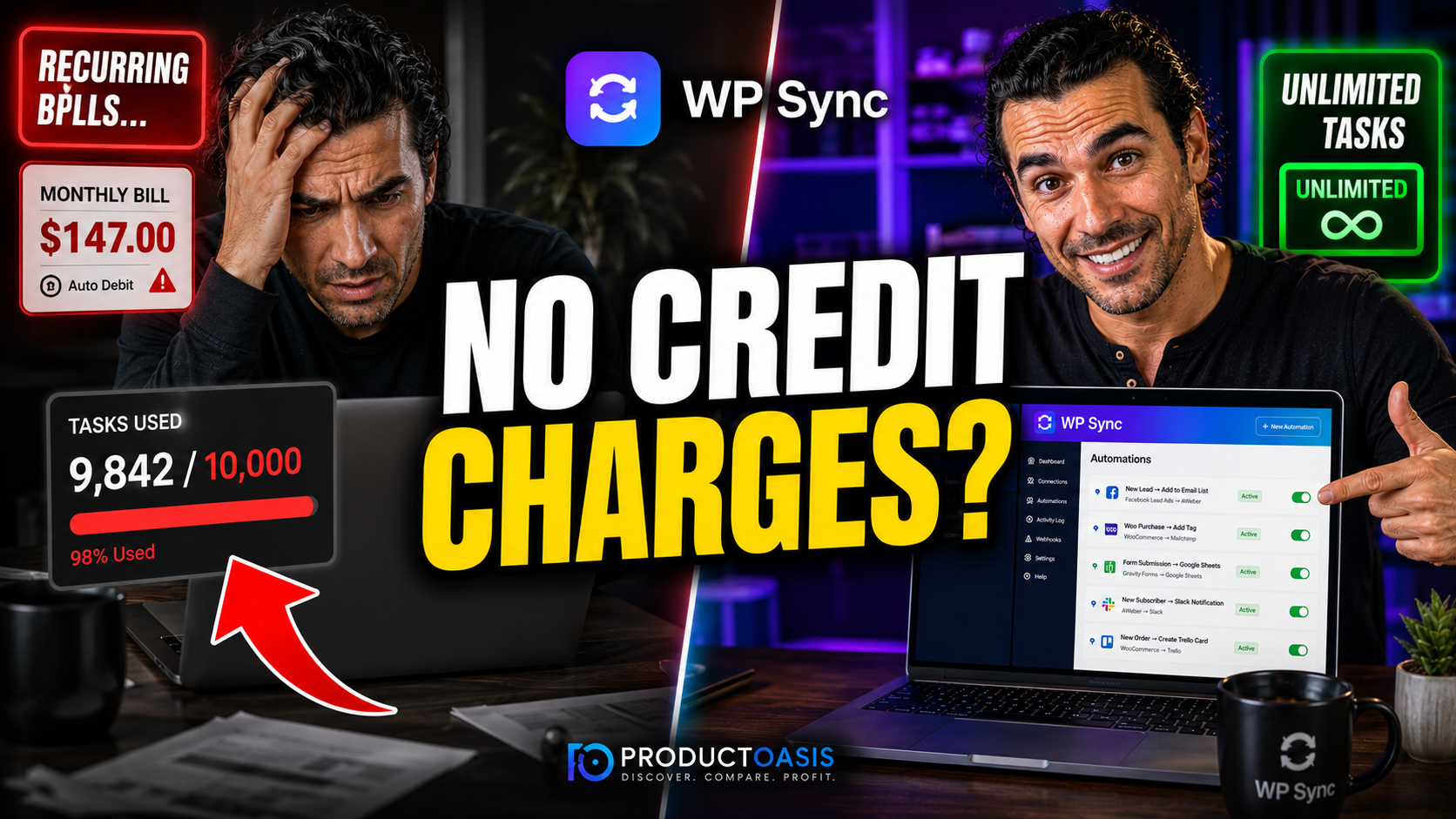
In simple terms, WP Sync doesn’t use a credit system at all. There are no credit charges, no task limits and no hidden meter running in the background once you own the plugin. You can confirm the current pricing and terms on the official WP Sync page here before you buy.
Why Do People Search For WP Sync Credit Charges?
Many automation and AI tools run on credit-based pricing, where every action consumes a credit and running out means paying more. Therefore, it’s a fair question to ask before committing to a new plugin.
However, WP Sync works differently by design. It isn’t built on a credit or token model, so there’s nothing to run out of once you’ve made your purchase.
How Does WP Sync Actually Handle Usage Limits?
Here’s what actually matters: WP Sync charges once, upfront, and then runs unlimited automations from there. Instead of metering each contact or each sync, the plugin simply performs the job as many times as needed.
What Happens If Your Lead Volume Grows?
Picture a marketer whose list grows from a few hundred contacts to several thousand over a year. With credit-based or task-based tools, that growth usually means upgrading to a higher paid tier just to keep automations running.
With WP Sync, that scenario looks different:
- Contacts sync automatically regardless of volume, with no per-contact charge
- Adding more destinations for the same lead doesn’t cost anything extra
- Future app connections are included at no additional charge
As a result, scaling your list doesn’t trigger new costs the way it would with a metered platform. This is one of the clearest differences when comparing WP Sync credit charges concerns against how tools like Zapier actually bill.
Is This Really Different From Zapier’s Task-Based Pricing?
Yes, meaningfully so. Zapier counts every single action as a task, so sending one contact to three apps burns three tasks instead of one. Consequently, an active list can burn through a monthly task allowance quickly.
WP Sync, however, has no equivalent system. Since it runs directly from your WordPress site rather than a cloud platform charging by usage, there’s no volume-based charge to plan around. I cover this comparison in more detail, along with the full pricing structure, in my complete WP Sync review.
So, Should You Worry About WP Sync Credit Charges?
Based on how the plugin is actually built, no. There’s no credit system to monitor, no usage dashboard warning you’re close to a limit, and no surprise bill at the end of the month.
To sum up, concerns about WP Sync credit charges don’t really apply here, since the entire pricing model is built around a one time payment instead of metered usage. If you want to see the full pricing tiers and what’s included at each level, my detailed WP Sync review breaks it all down.