
Why is everyone talking about automating video creation?
Content creation used to be a manual process.
You had to plan, record, edit and publish. Each step required time, effort and often a learning curve. For many creators, this made consistency difficult.
Now, with the rise of AI tools, there is a growing belief that much of this process can be automated.
This idea is appealing, especially for those who want to produce content regularly without turning it into a full-time task.
At the same time, it raises an important question.
Can AI actually automate short-form video creation in a meaningful way, or is it just simplifying parts of the process?
What does automation really mean in this context?
Automation in content creation does not mean removing human input entirely.
Instead, it refers to reducing the number of manual steps required to produce a piece of content.
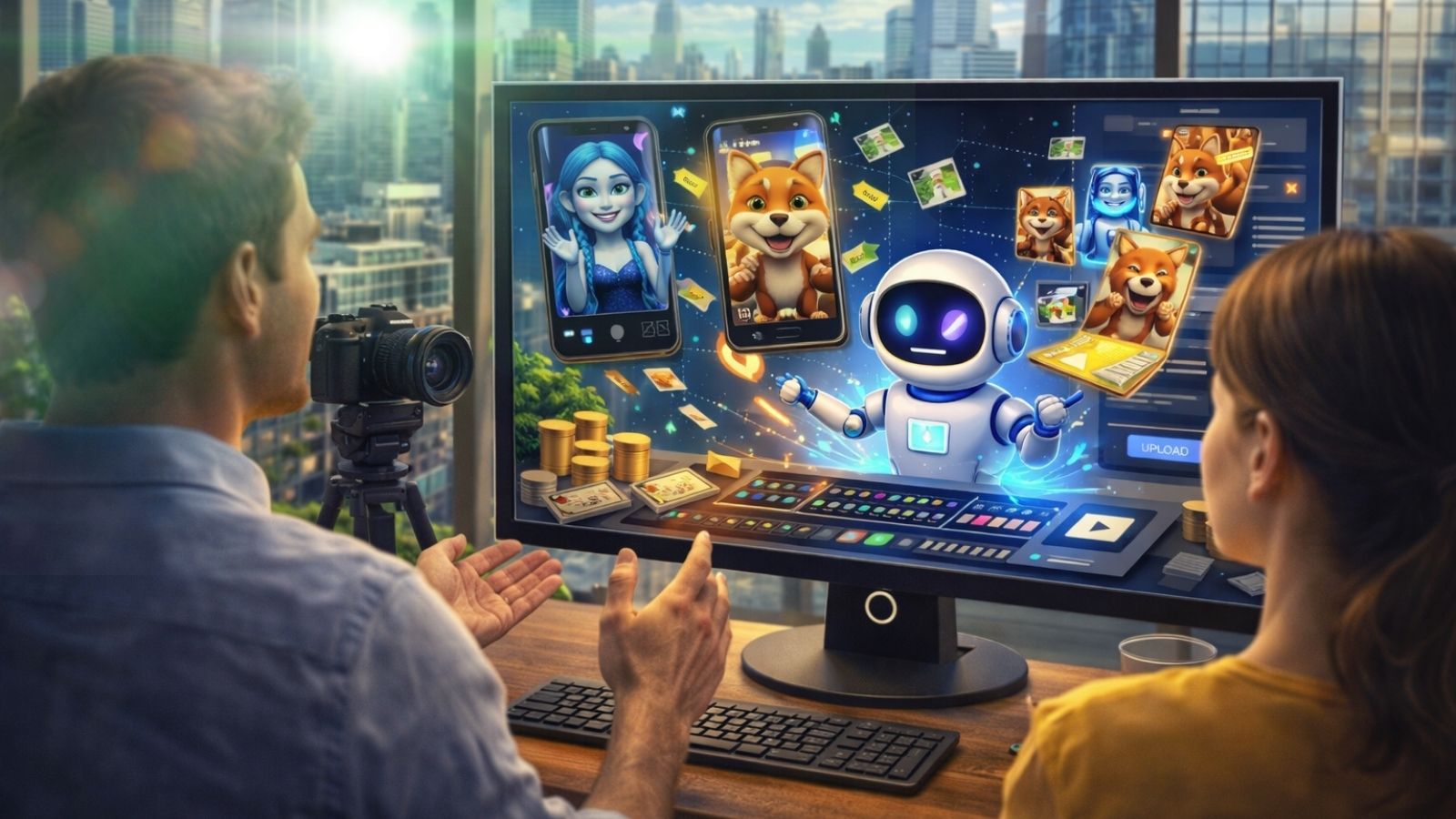
In the case of short-form video, this can include generating scripts, creating voiceovers, animating visuals and formatting the final output.
The goal is to make the process faster and more accessible, especially for beginners.
However, the creative direction still comes from the user.
How does Viral Characters AI approach automation?
Viral Characters AI focuses on automating specific parts of video creation rather than the entire process.
The platform allows users to generate videos using characters that can speak, react and interact within a scene.
From a walkthrough perspective, the process is straightforward.
You select a character.
You input or generate a script.
The system creates the voice, applies expressions and builds the scene.
The final video is then rendered in a format suitable for social media platforms.
This approach reduces the need for editing software and technical skills.
Does the walkthrough reflect real-world usability?
One of the key factors in evaluating any tool is whether the walkthrough matches actual usage.
In this case, the workflow appears to be consistent with what is shown in demos.
The interface is designed to guide users through each step, making it accessible even for those with no prior experience.
However, it is important to note that ease of use does not guarantee results.
The tool simplifies production, but the effectiveness of the content still depends on the idea behind it.
What parts of video creation are actually automated?
The platform automates several elements.
Script generation, which provides a starting point for the content.
Voice creation, which removes the need for recording audio.
Character animation, including lip-sync and basic expressions.
Scene building, which adds context to the video.
These features work together to create a complete video without requiring manual editing.
For many users, this represents a significant reduction in effort.
What still requires human input?
Despite the level of automation, certain aspects remain user-driven.
Choosing the topic or idea.
Deciding the tone and direction of the content.
Adapting the output based on performance.
Understanding audience preferences.
These elements are what differentiate one creator from another.
Automation can assist with execution, but it does not replace creative decision-making.
How does this compare to traditional workflows?
Traditional video creation involves multiple tools and steps.
Recording audio or video.
Editing clips and adding effects.
Synchronizing visuals with sound.
Exporting and formatting content.
This process can be time-consuming, especially for beginners.
In contrast, tools like Viral Characters AI combine several steps into a single platform.
This does not eliminate the need for effort, but it shifts the focus from technical execution to content planning.
Are there practical use cases for this level of automation?
Yes, particularly in areas where consistency is important.
Creators who want to post regularly can benefit from faster production.
Marketers experimenting with different content formats can test ideas more efficiently.
Businesses exploring short-form content can create videos without investing in equipment or production teams.
These use cases highlight the practical value of automation when applied correctly.
What about bonuses and additional resources?
In many product launches, bonuses are included to enhance the core offering.
These can range from content templates and training materials to additional tools.
While bonuses should not be the primary reason for choosing a tool, they can provide additional value, especially for beginners.
They often focus on areas such as content ideas, marketing strategies and workflow optimization.
Can AI fully replace manual video creation?
At this stage, the answer is no.
AI can automate certain aspects of video creation, but it does not replace creativity, strategy or audience understanding.
What it does is make the process more accessible.
For creators who previously struggled with technical barriers, this can be a significant advantage.
The key is to use automation as a support system rather than a replacement.
So, can AI really automate short-form video creation?
AI can automate a large part of the process, particularly the technical aspects.
Tools like Viral Characters AI demonstrate how scripting, voice generation and animation can be combined into a streamlined workflow.
However, the success of the content still depends on how these tools are used.
Automation makes content creation easier, but it does not guarantee results.
If you want to see how the platform works in detail and how it fits into a broader content strategy, you can explore the full walkthrough and review here
Final thoughts
The idea of automating video creation is no longer theoretical.
It is already happening, and tools like Viral Characters AI are part of that shift.
For creators, the real opportunity lies in how they adapt to this change.
Those who combine automation with creativity are likely to benefit the most.
The tools will continue to evolve, but the principles of engaging content will remain the same.